


Start here
Meet AI
Learn how generative AI chats work and where AI can help with an everyday task.
StartStart here
Learn how generative AI chats work and where AI can help with an everyday task.
StartPerhaps you have opened an AI chat, looked at the empty message box, and wondered: What am I supposed to ask? Or perhaps you have seen a polished, confident answer and thought: How do I know whether this is right? Those are not signs that you are bad at AI. They are the right questions to begin with.
AI becomes useful when you give it a small, clear job—and when you know which parts of the result still need your judgment. In this course, you learn that by doing, not by memorizing technical terms or a “perfect” Prompt.
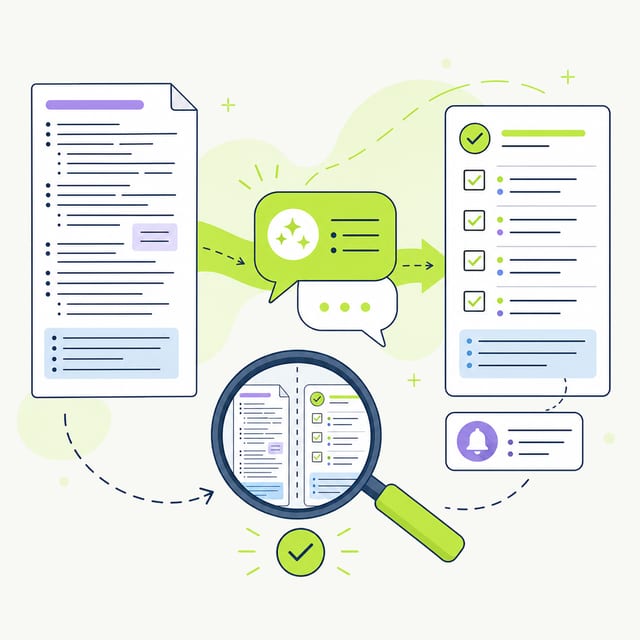
You begin with a long notice and finish by improving a plan after people have actually tried it. Along the way, the situations become less tidy: there may be several workable choices, an important answer may be missing, or a webpage may have changed. Each challenge gives you one more move you can reuse.
You will not just watch perfect examples. You choose the job for AI, tell it what matters, continue the conversation, and notice when an answer leaves out or changes an important fact. You learn which questions need an answer from a person and which claims need checking on the original page. AI can reorganize information, suggest possibilities, and revise a draft. It cannot make a missing fact appear, turn a proposal into a decision, or prove its own answer correct.
By the end, you will have a practical way to start an AI conversation, make the result more useful, check what matters, and know when to stop asking AI and act yourself.
Yes. You only need basic webpage or touchscreen reading skills. No technical background, AI vocabulary, or special Prompt style is assumed.
No. The Lessons use preset, reviewable AI conversations inside AILesson. Trying a real AI tool afterward is optional and remains subject to that product's age, region, account, privacy, and access rules.
No. The Course provides the practice situations. When transferring the method to your own task, share only material the task needs and leave out private or sensitive information.
You will be able to start and continue a useful AI conversation, notice missing or changed facts, check important claims, and decide when to ask a person or act yourself. The Course does not cover every AI product feature or make AI answers automatically reliable.