Author: AILesson8 min setupTested with:ChatGPTReviewed: 2026-08-28
Quick answer
Shape memories and source material into a truthful narrative without inventing scenes, dialogue, motives, or certainty. Provide: Experience and available evidence, Purpose, audience, and form, Truth, consent, and privacy boundaries. Expected result: A fact-bounded narrative outline with gaps, privacy choices, and scene-level evidence.
1
Add your context
Your text stays in this browser. AILesson Prompts does not send it to a model or server.
2
Your prompt
Unfilled fields remain visible as placeholders, so you can still copy and edit the prompt
Create a truthful writing outline from the supplied real experience.

Remembered events, chronology, sensory detail, records, exact quotations, uncertainty, and later knowledge:
[experience]

Purpose, audience, form, length, central tension, tone, and intended takeaway:
[purpose]

Truth standard, privacy substitutions, consent needs, disputed memory, legal/safety risks, and prohibited inferences:
[boundaries]

Separate contemporaneous observation, exact record, reconstructed memory, later knowledge, interpretation, and unknown. Do not manufacture dialogue, composite people, chronology, motives, sensory details, or emotional certainty. If compression, anonymization, or reconstruction is allowed, label it and explain what truth it preserves. Find a narrative question and select only events that develop it; do not force a moral. Produce a chronological fact ledger, privacy/consent decisions, candidate opening choices, scene-by-scene outline with evidence basis and uncertainty notes, transitions, reflection points that distinguish then from now, possible ending modes, missing details to verify, and a source/fact check. Offer alternatives where memory gaps change the structure.
Private by defaultPrompt assembly happens locally in your browser. Avoid placing confidential information into any AI service unless your organization allows it.
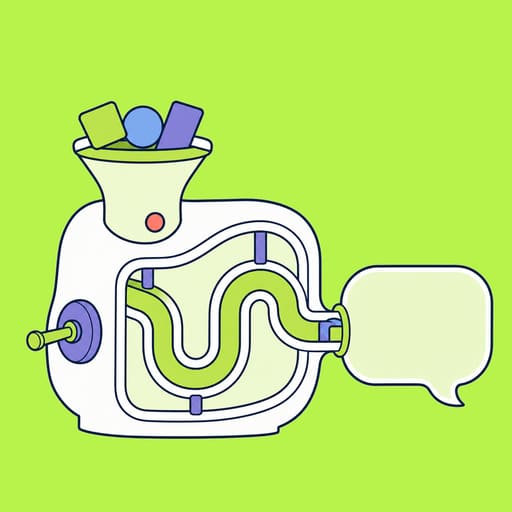
From input to outcome
A worked example
See how concrete context turns this recipe into a usable result
Actual input
Experience and available evidence
In 2019 I volunteered at a rural book donation drive. I remember arriving after rain, boxes in a school corridor, and realizing half the donated books were advanced English textbooks unsuitable for the requested primary Chinese reading corner. My spreadsheet dated 12 June lists 486 books: 211 suitable, 173 advanced English, 62 damaged, 40 unclear. An email from teacher Chen before the drive asked for illustrated Chinese books ages 7–10. I do not remember exact spoken words. Later photos show five volunteers sorting; I had remembered four. The school eventually used 198 books, per a September email, but reasons for the difference are unknown.
Purpose, audience, and form
1,200-word personal essay for volunteer coordinators about the gap between generosity and listening. Reflective, not self-congratulatory; first person; no claim about all donation programs.
Truth, consent, and privacy boundaries
Use pseudonym Teacher Chen and do not identify school/location. No student stories or photos. Do not blame donors or infer teacher feelings. Exact email wording may be paraphrased with attribution, not quoted. Admit memory correction and unknown disposal/use of other books.
Example output
Narrative question: what changes when helping begins with the request rather than the donation? Fact ledger distinguishes the remembered wet arrival and corridor from the dated spreadsheet, pre-drive email, later photograph correction, and September use count.
Outline: 1) Open with the corridor boxes after rain, explicitly as memory; withhold a lesson. 2) Flash back to the paraphrased request for illustrated Chinese books ages 7–10, showing that the need was available. 3) Sorting scene anchored to the four spreadsheet categories and corrected five-volunteer photo; no invented dialogue. 4) Recognition: 211 of 486 appeared suitable at sorting, while suitability itself was the volunteers’ working classification, not the teacher’s final judgment. 5) September email says 198 were used; preserve the 13-book difference and all other dispositions as unknown. 6) Reflect on process—request, acceptance criteria, pre-check—not donor motives. 7) End with a question coordinators can ask before collecting, not a universal moral.
Privacy gate removes place and student detail; Teacher Chen is a disclosed pseudonym. Verify whether the spreadsheet definition of “suitable” was documented. Alternative opening uses the corrected volunteer count to foreground unreliable memory if the essay should emphasize evidence more than atmosphere.
Why this works
1
Evidence labels preserve the difference between lived observation, memory, and later interpretation.
2
Privacy and consent decisions belong in the outline before vivid drafting makes them harder to change.
Check the result
Is every scene grounded in an observation, record, labeled reconstruction, or explicit uncertainty?
Are other people's motives, dialogue, identities, and sensitive details handled within stated boundaries?
Does the narrative shape serve the purpose without forcing a lesson unsupported by events?
Use it with confidence
Frequently asked questions
Practical answers about when to use this recipe, what to provide, and where human review still matters
What should I prepare before using “Create a writing outline from a real experience”?
For “Create a writing outline from a real experience,” prepare Experience and available evidence, Purpose, audience, and form, and Truth, consent, and privacy boundaries. Replace placeholders only with information you can verify. If a detail is unknown, preserve that uncertainty explicitly instead of asking the model to infer it.
When is the “Create a writing outline from a real experience” result not ready to use?
The result is not ready if it does not yet deliver the stated outcome—A fact-bounded narrative outline with gaps, privacy choices, and scene-level evidence—from the supplied evidence, or if it relies on unresolved assumptions, missing approvals, or invented details. Use the checks as release gates: revise the source inputs or assign a named, authorized reviewer instead of polishing an unsupported output.
Which AI tools have recorded tests for “Create a writing outline from a real experience”?
The published test record for “Create a writing outline from a real experience” lists ChatGPT as of 2026-08-28. This confirms recorded runs, not guaranteed compatibility or identical results in later product versions. For another tool or version, keep every constraint visible and repeat the result checks before use.
Go from understanding AI to getting things done. Practice prompting, reviewing, and improving results through interactive lessons for work and everyday life.



 ChatGPT